
Breaking Down Meta's AI Strategy
Why Zuck open-sourced Llama models & his new search engine

👋 Megan here, welcome to The Tech Rundown, where I provide analysis on this week’s biggest tech news to help you understand what’s really going on.
In todays’s edition: We break down why Zuck has been such a huge proponent of open-source AI and how big AI will really be in their future with their largest product release potentially in its history.
Total reading time: 2 minutes
Not a subscriber yet? Sign up below to receive next week’s rundown.

What Happened?
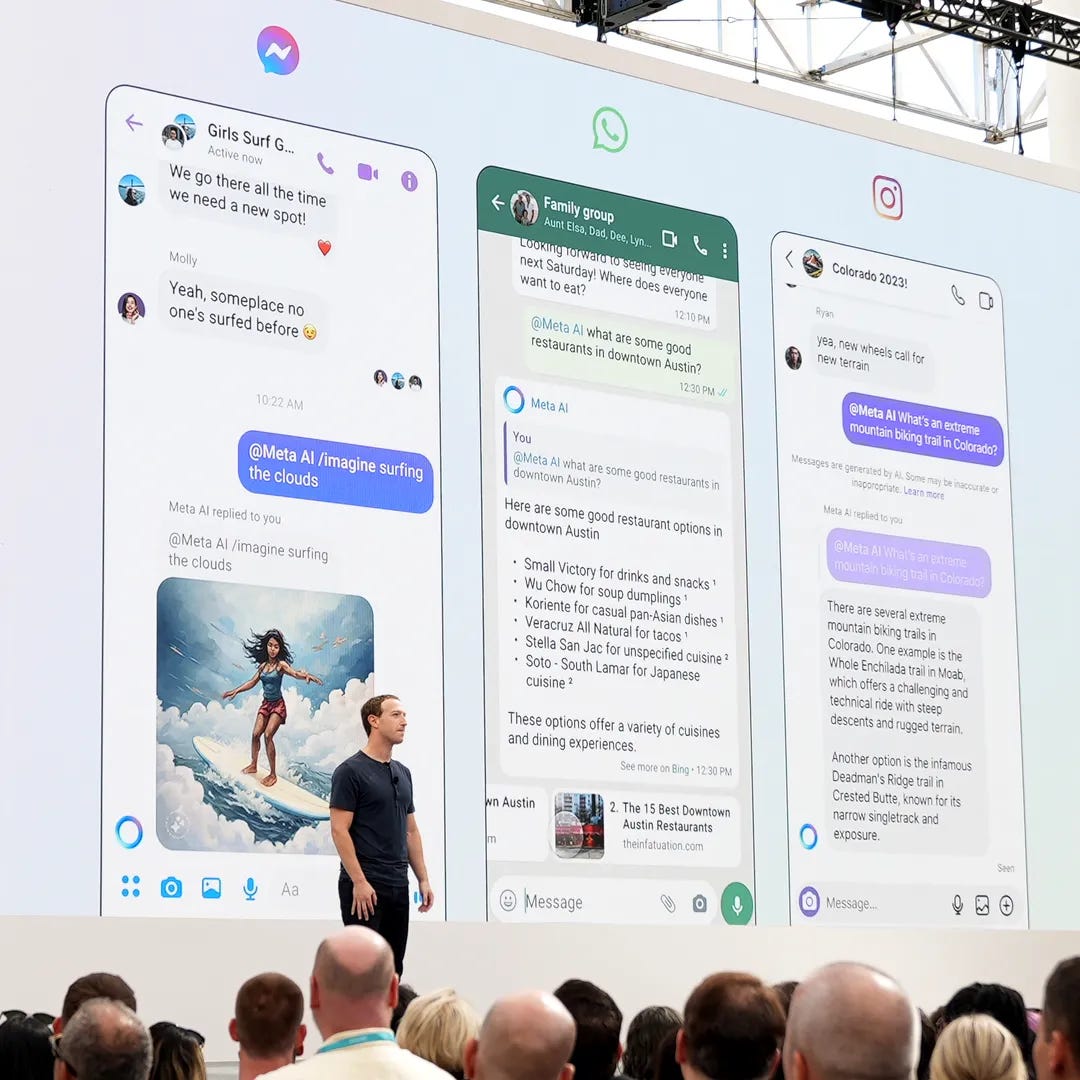
This past week Meta annoucned a significant push into the AI space with the integration of its AI assistant into its core products like Instagram, Facebook, WhatsApp, and Messenger.
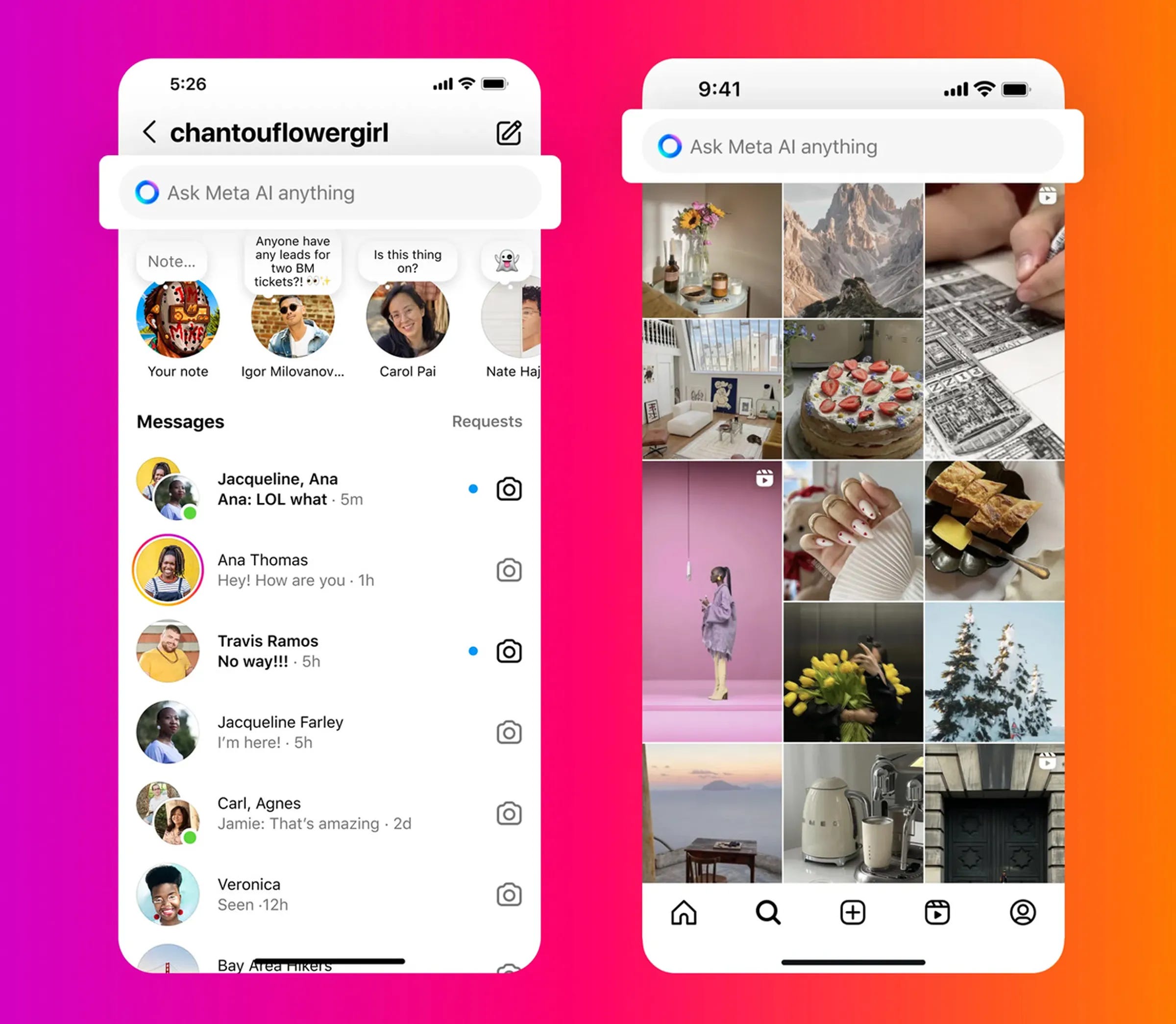
The AI assistant is now accessible through the search box of these apps, as well as in the main Facebook feed and on a dedicated website, Meta.ai.
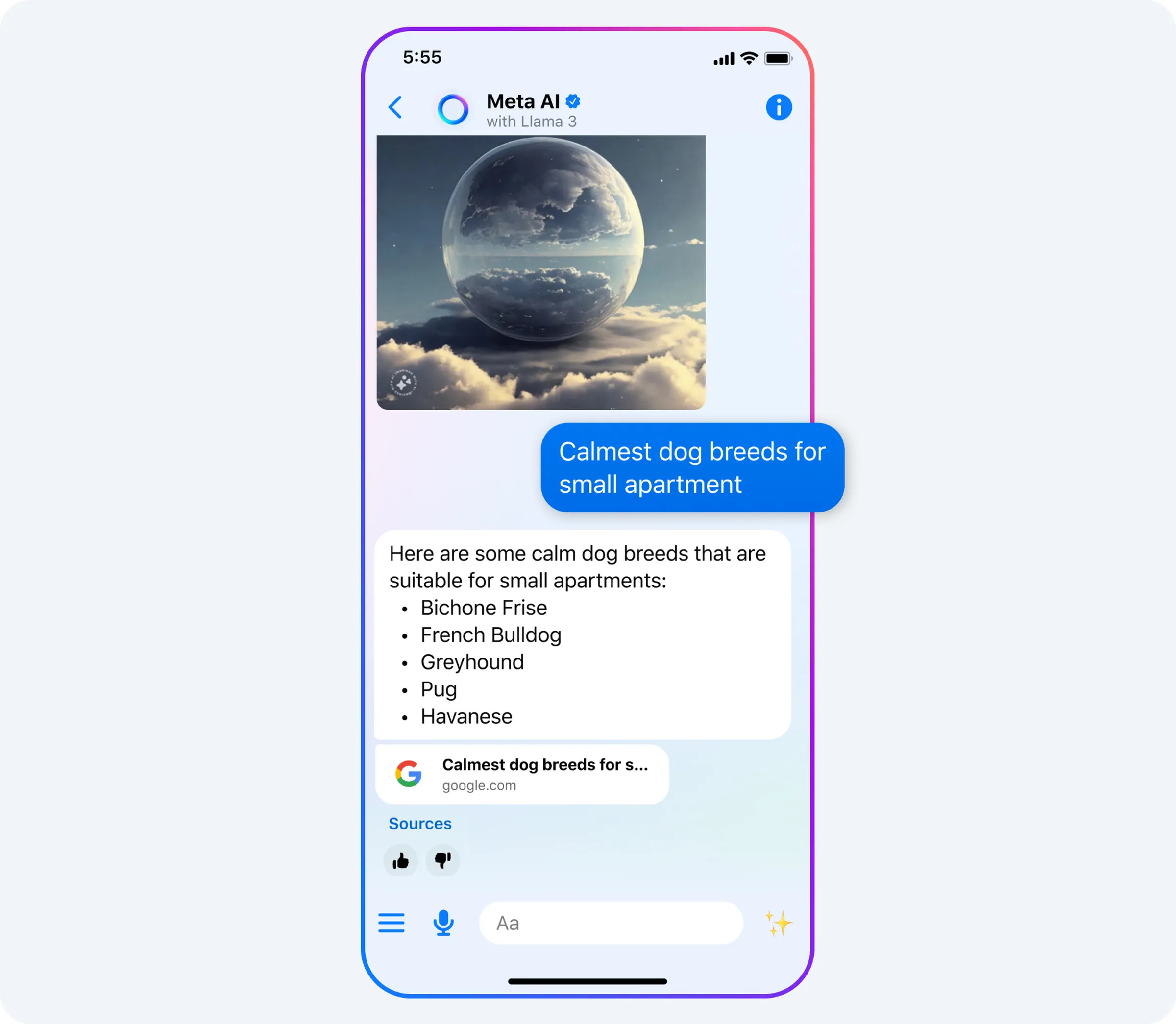
Additionally, Meta has unveiled Llama 3, the latest version of its open-source AI model. Llama 3 boasts over 400 billion parameters, significantly larger than the previous Llama 2 model's 70 billion parameters and claims that it outperforms competing models in its class on key benchmarks, while a much larger, multimodal version is expected in the coming months.
One noteworthy feature of Meta's AI assistant is its ability to access real-time search results from Bing and Google, differentiating itself from ChatGPT and other major players like Anthropic’s Claude.
Why is this happening?
Meta's heavy investment in GPUs over the past two years appears to be an indication of their anticipation and preparation for this AI push. Similar to their strategy with Threads, Meta is aggressively distributing its AI assistant across all its platforms, leveraging its vast user base and existing real estate.
With a market capitalization of $1.2 trillion, Meta is actively exploring new markets that offer potential for long-term growth. While their foray into virtual reality with Oculus has been somewhat underwhelming, their initiatives with Reels and Threads have shown relative success in countering TikTok's dominance.
This move appears to be more than just an extension of Meta's social platforms, identifying AI search/answer engines akin to Perplexity & Google Gemini as an attractive market to enter, rather than simply using Llama 3 to generate images or message virtual characters.
So what?
Meta's integration of its AI assistant across its platforms and the release of Llama 3 signify a major strategic shift for the company. By leveraging its existing user base and distribution channels, Meta is positioning itself to compete directly with other AI assistants like ChatGPT.
The real-time search integration and the claimed performance advantages of Llama 3 could potentially give Meta's AI assistant a competitive edge, offering users a more comprehensive and capable AI solution. However, Facebook have a checkered past with launching successful products (the most notable success being Instagram stories).